Marketing, websites and AI for businesses in Toronto
The main-street idea started here, in 1970.
nuordinary helps established businesses, healthcare practices, manufacturers and nonprofits work out honestly what needs to change, then builds what moves them: strategy, brand, websites, marketing, search, AI and systems. Our head office is in London, Ontario, and we work with organisations in Toronto and across Canada.

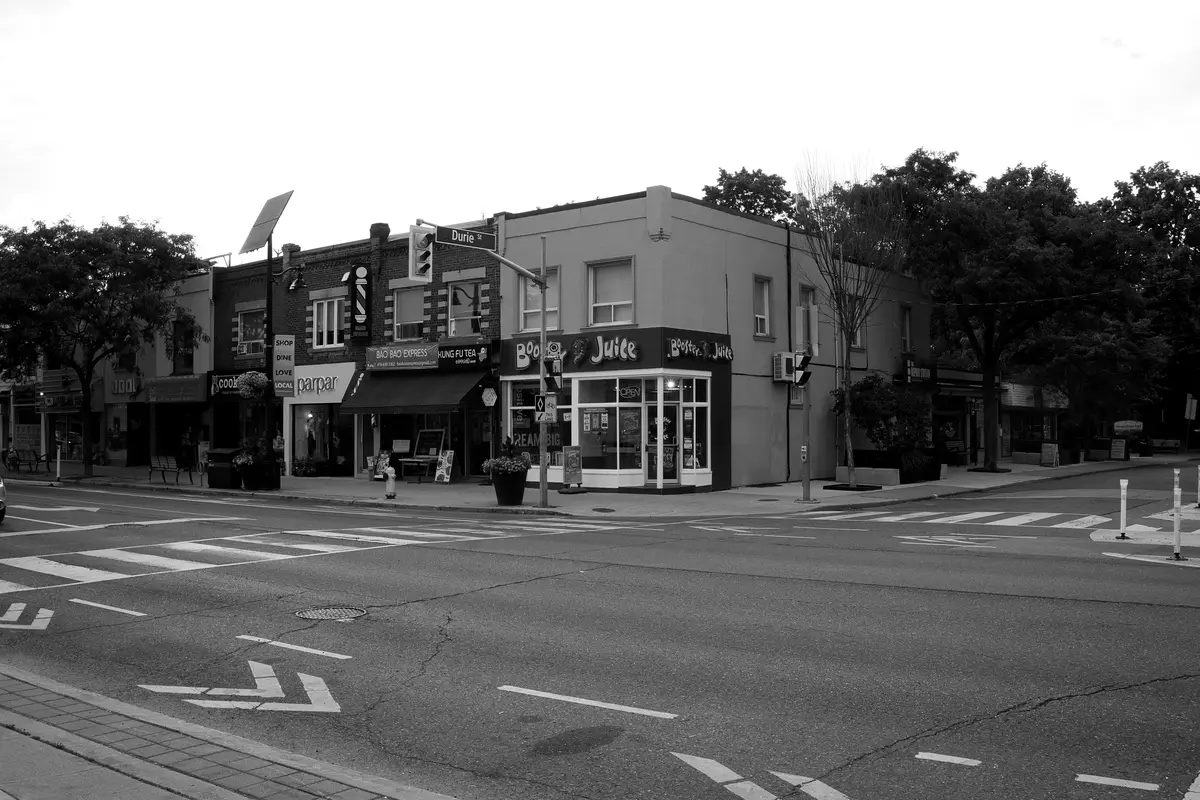
Bloor West Village did it first.
On 16 September 1970, the City of Toronto accepted an application from Bloor West Village. In the words of the plaque that marks it, that created “the first Business Improvement Area anywhere in the world”: local businesses pooling their money to look after their own street.
The idea spread across Toronto. Today the city has more than 80 of them, and the plaque calls them “Toronto’s gift to the world”.
In 2025, Toronto counted 74,560 workplaces and a record 1,623,720 jobs. Behind those numbers are owners who opened a door and kept it open.
Who’s building here
A few of the people and places building Toronto:
[01] The makers
Dreamed up on a canoe trip.
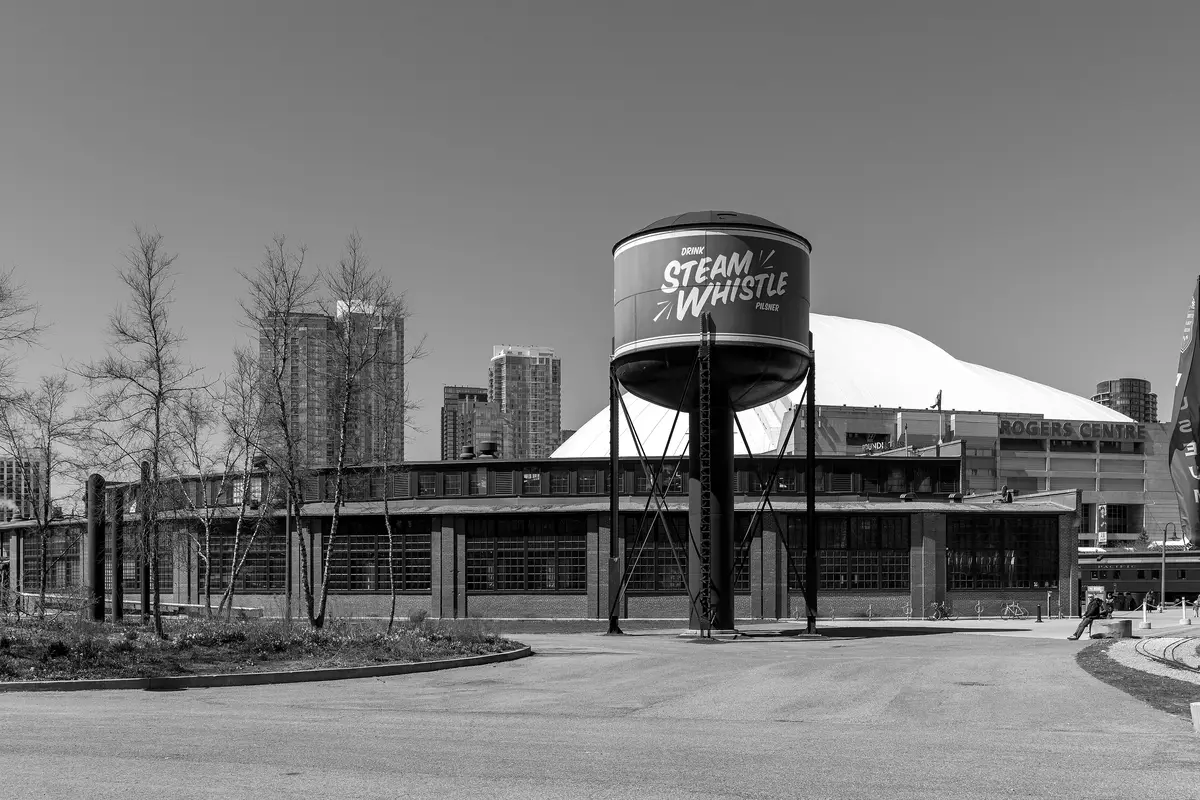
In the spring of 1998, three friends on a canoe trip came up with the idea for a beer. On 22 March 2000, the first bottle of Steam Whistle Pilsner rolled off the line, inside a retired Canadian Pacific Railway roundhouse at the foot of the CN Tower.
In 2015, the founders announced that Steam Whistle was “NOT FOR SALE” and would stay independent.
Toronto makes a lot more than beer. Manufacturing is the largest source of jobs in the city’s employment areas, with 76,450 in 2025. This summer, Accuenergy, a Toronto maker of power and energy metering, began a $10 million growth project, with about $2.6 million from FedDev Ontario.
Making it is the hard part. Being found for it shouldn’t be.
[02] The people who care for people
Canada’s top research hospital, 15 years running.
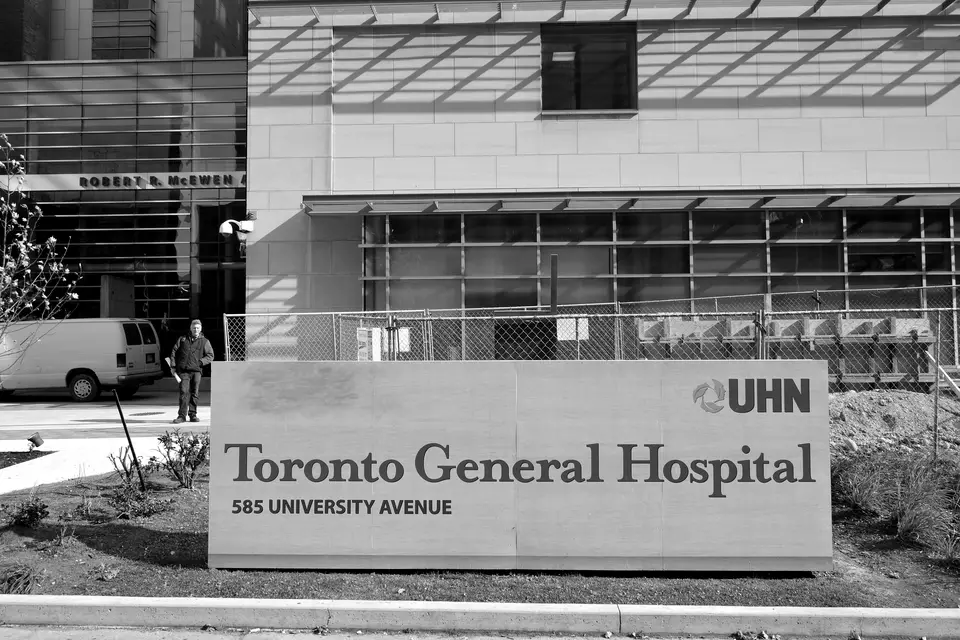
University Health Network has been named Canada’s top research hospital for the 15th year in a row, with more than $599 million invested in research. It runs 10 sites with more than 20,000 people.
SickKids saw its first patient in 1875: a three-year-old girl named Maggie. Sunnybrook, opened in 1948, is Canada’s largest trauma centre.
Around them are the clinics, practices and allied health professionals people see every week. Their job is care. The website, the booking and the paperwork should make that easier, not harder.
[03] The main streets
A peameal bacon sandwich and the key to the city.
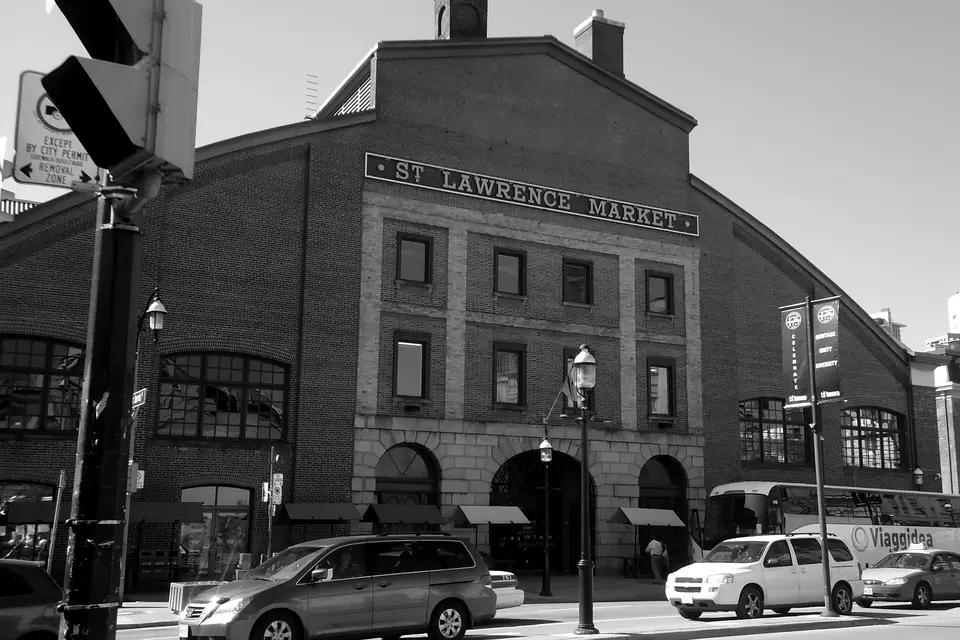
St. Lawrence Market has been a public market since 1803. Today it has more than 60 speciality vendors.
One of them is Carousel Bakery, run by the Biancolin family since the 1960s and known for its peameal bacon sandwich. In 2025, brothers Robert and Maurice Biancolin were given the key to the city by Mayor Olivia Chow. They have since handed the bakery to new owners, who are keeping the recipe and the staff.
Across town, Kensington Market became a National Historic Site in 2006, recognised for the waves of newcomers who have built lives and businesses there since the early 1900s.
Owners on these streets run the shop, the books, the staff and the social media. They shouldn’t have to figure all of it out alone.

[04] The organisations working for something bigger
More need. Fewer donors. Still showing up.
Daily Bread Food Bank’s 2025 Who’s Hungry report counted more than 4.1 million food bank visits in a year. More than 1 in 10 Torontonians now rely on a food bank.
Toronto Foundation’s Vital Signs report found that 83% of nonprofits saw demand rise, and only 15% can fully meet it. The share of tax-filers claiming donations fell from 26% in 2005 to 17% in 2022.
The work goes on anyway. United Way Greater Toronto helped 30,000 families keep their housing through eviction prevention.
Small teams carry a lot. The systems behind them should carry some of it.
After 15 years, the Crosstown opened.
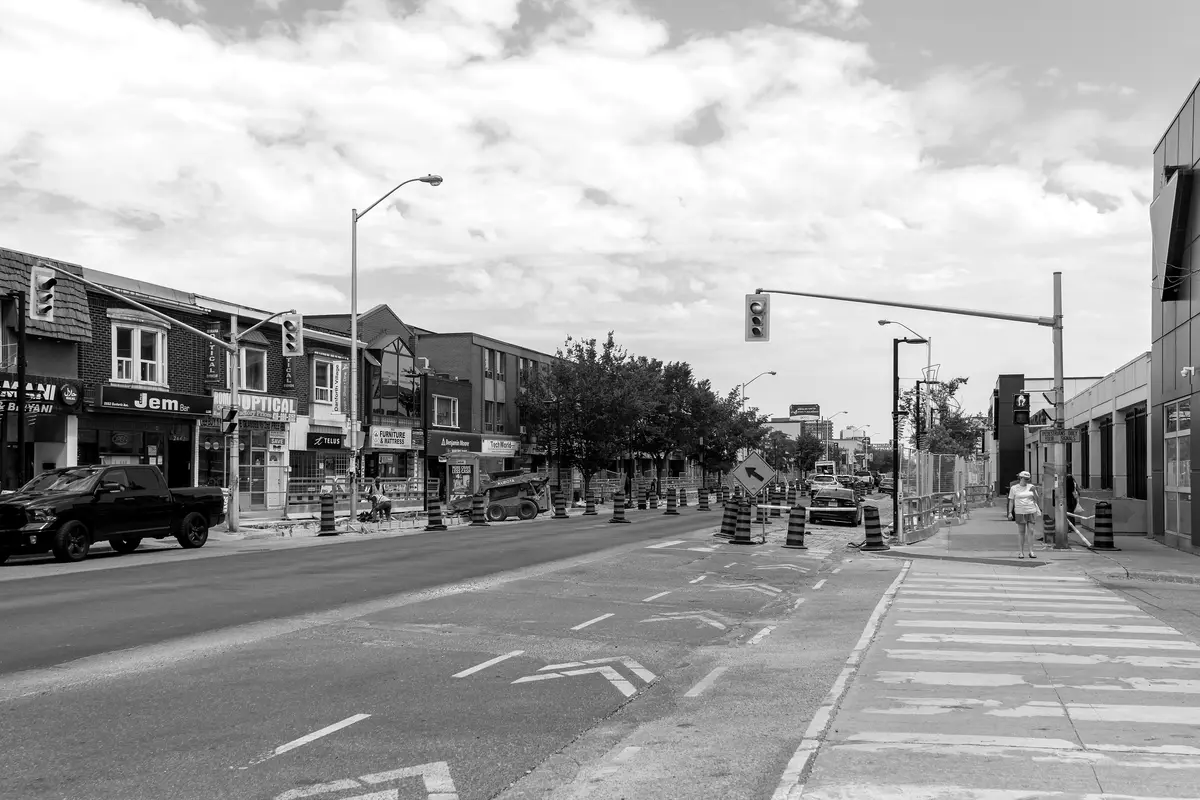
Years of construction before the Eglinton Crosstown opened on 8 February 2026.
The Eglinton Crosstown opened on 8 February 2026, after about 15 years of construction along one of the city’s busiest streets.
Andre Crichlow has run Just Incredible Hair on Eglinton for more than 30 years. On opening day he told NOW Toronto the neighbourhood now has to rebuild: “Somehow we have to build it back.”
Little Jamaica, along Eglinton Avenue West, is part of that story. In 2021, City Council moved to support Black-owned businesses there and protect the area’s cultural heritage.
We want to tell more of these stories in our Field Notes. If you’re building something in Toronto, tell us about it.
Building here isn’t always easy.
- 01
3,027 Toronto businesses, employing about 66,000 people, face direct exposure to US tariffs (September 2026).
- 02
The Toronto Region Board of Trade called new US tariffs “a direct hit to Toronto-region jobs and investment” (August 2026).
- 03
Businesses along Eglinton lived with about 15 years of Crosstown construction.
- 04
Nonprofits face rising demand while the share of people giving keeps falling.
Those pressures land differently on everyone:
A business owner needs more revenue without more hours in the week.
A manufacturer could serve new markets but struggles to show buyers what it makes.
A practice wants to see more patients with a team that’s already stretched.
A nonprofit needs more supporters without more work for its staff.
Different problems. Different answers. Sometimes the first step is to stop adding activity and work out what will actually make a difference.
Where Toronto owners get help
In 2026 the City raised its small business property tax discount from 15% to 20%, which it says helps 28,000 local businesses. There’s more help in town:
Programmes and eligibility change, so check with each one directly.
Sometimes the most useful thing we can do is point you to the right resource, even when that resource isn’t us.
Toronto
How nuordinary works with Toronto organisations.
nuordinary’s head office is in London, Ontario. We take on work across the province and the rest of Canada, Toronto included.
You know your organisation better than anyone else does. Our job isn’t to arrive with a package. It’s to understand what you’ve built, where you want to go and what’s in between.
See where you are. Define what comes next. Build what gets you there. Measure the movement.
- Local businesses
- Easier for the right customers to find you and choose you, with systems that don’t depend on you for everything.
- Healthcare practices
- Easier for patients to find you and book, with less paperwork for your team.
- Manufacturers
- Complex capabilities explained clearly, to the buyers who need them.
- Nonprofits
- A mission that’s easier to find, support and sustain.
Capabilities that fit what’s happening in Toronto: local SEO, web design, lead generation, email marketing and digital strategy.
Questions
Can nuordinary work with organisations in Toronto?
Yes. nuordinary is based in London, Ontario, and takes on work for established businesses, healthcare practices, manufacturers and nonprofits across Ontario and the rest of Canada, Toronto included.
What can nuordinary help a Toronto business with?
Strategy, brand, websites, marketing, SEO and AI search visibility, AI and automation, and better systems. We start with the outcome you want, then choose the capabilities that get you there.
Can you help a Toronto main-street business get found locally?
Yes. A complete Google Business Profile, consistent listings and a website that answers customers’ questions are often the fastest wins for a neighbourhood business. See local SEO.
Can you work with Toronto nonprofits?
Yes. Nonprofits are one of the four kinds of organisation nuordinary focuses on. With demand rising and giving falling, systems that let a small team do more are often the place to start.
How do we start?
Start a conversation. You don’t need a brief or a list of services. Tell us what’s happening and what you’d like to change.
Other places we celebrate
Sources (27)
- Read the Plaque, Bloor West Village BIA (opens in a new tab)
- City of Toronto, Business Improvement Areas (opens in a new tab)
- City of Toronto, Toronto Employment Survey 2025 (opens in a new tab)
- Steam Whistle, our story (opens in a new tab)
- Steam Whistle, 25 years (4 March 2025) (opens in a new tab)
- Steam Whistle, ownership announcement (26 November 2015) (opens in a new tab)
- Government of Canada, FedDev Ontario Toronto investments (17 July 2026) (opens in a new tab)
- UHN Foundation, Canada’s top research hospital (4 December 2025) (opens in a new tab)
- University Health Network, about UHN (opens in a new tab)
- SickKids, our beginnings (opens in a new tab)
- Sunnybrook Health Sciences Centre (opens in a new tab)
- Read the Plaque, St. Lawrence Market (opens in a new tab)
- City of Toronto, St. Lawrence Market (opens in a new tab)
- CP24, Carousel Bakery brothers get key to the city (15 July 2025) (opens in a new tab)
- Parks Canada, Kensington Market National Historic Site (opens in a new tab)
- Daily Bread Food Bank, Who’s Hungry 2025 (27 October 2025) (opens in a new tab)
- Toronto Foundation, Vital Signs 2024 (opens in a new tab)
- United Way Greater Toronto, annual campaign (9 September 2025) (opens in a new tab)
- CTV News, the Eglinton Crosstown opens (9 February 2026) (opens in a new tab)
- NOW Toronto, Little Jamaica businesses count the cost (9 February 2026) (opens in a new tab)
- Global News, Little Jamaica cultural district (28 April 2021) (opens in a new tab)
- Canadian HR Reporter, tariff exposure map (22 September 2026) (opens in a new tab)
- Toronto Region Board of Trade, reaction to new US tariffs (22 August 2026) (opens in a new tab)
- City of Toronto, small business property taxes (20 February 2026) (opens in a new tab)
- City of Toronto, Starter Company Plus (opens in a new tab)
- Futurpreneur, core startup programme (opens in a new tab)
- Google Canada, Digital Main Street (13 June 2016) (opens in a new tab)
Where next for your Toronto organisation?
Steam Whistle started on a canoe trip. Bloor West Village started with a few merchants and an idea. Tell us where you’re starting from, and where you want to go.
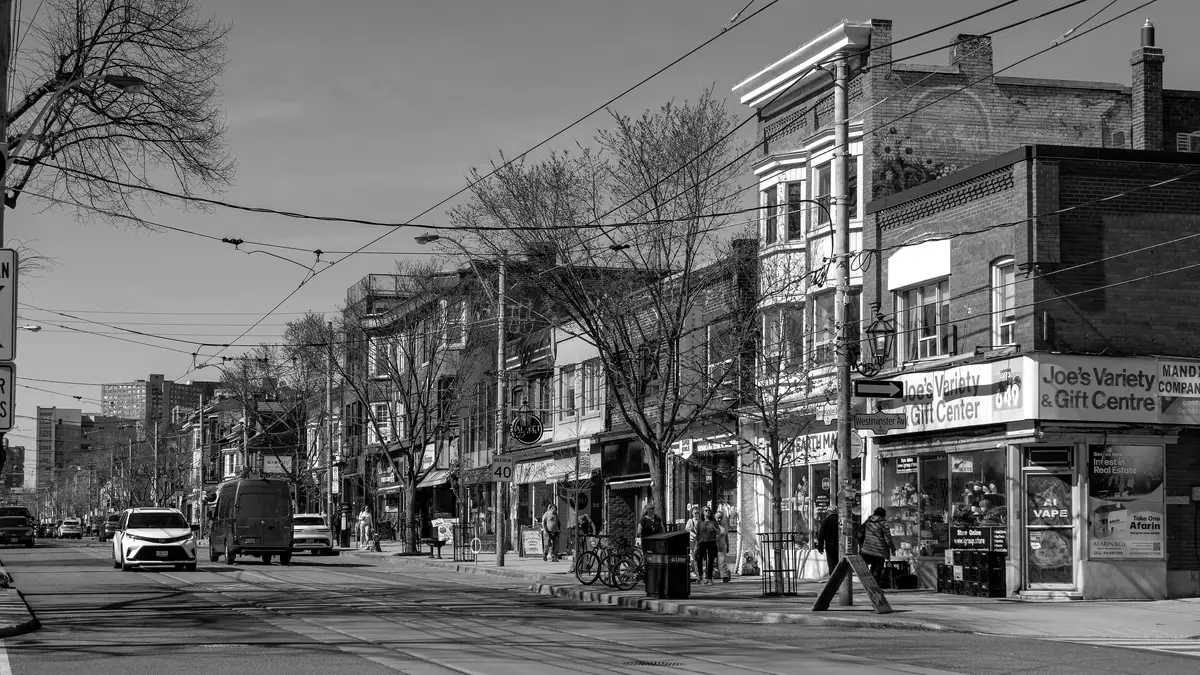
Fig. 08. Roncesvalles Avenue, Toronto. Credit